
Article 02
The Bumble Effect: How Whitney Wolfe Herd Turned a Women-First Vision into a Billion-Dollar Business
Whitney Wolfe Herd left Tinder after a harassment lawsuit and founded Bumble in 2014 with one rule: women message first. That single design choice solved a core platform economics problem — high female churn — and turned it into a competitive advantage through better retention, network effects, and brand differentiation. Bumble expanded into friendship and professional networking, went public in 2021 at a $13 billion valuation, and made Wolfe Herd the youngest woman to lead a U.S. IPO. The article uses this to expose a broader market failure: female founders receive less than 3% of VC funding despite outperforming male-led peers on returns. Post-IPO decline, a leadership transition, and Wolfe Herd's 2025 return round out the story. The core argument: diversity in entrepreneurship isn't about fairness, it's about who actually understands underserved markets.
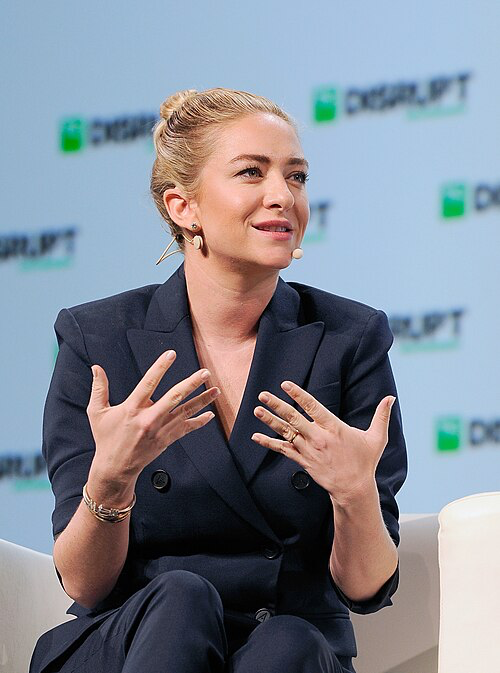
In 2014, a 24-year-old named Whitney Wolfe Herd sat down to build a dating app. She had just left Tinder (the company she co-founded) following a sexual harassment lawsuit against her colleagues. With a $10 million investment, borrowed infrastructure, and a single disruptive idea, she launched Bumble: a platform where women must send the first message, or a match disappears within 24 hours.
That one design decision was not just a social statement. It was a calculated economic move. One that would reshape platform dynamics, expose structural gaps in the venture capital market, and eventually take Bumble to a $13 billion valuation at its 2021 IPO. Wolfe Herd became the youngest woman ever to lead a company through a U.S. public offering, at age 31. Her story is a compelling study in how gender-centric product design can become a genuine market advantage, and why the systematic barriers facing female founders are not merely a matter of fairness, but of economic efficiency.
From Tinder to Bumble: The Origin Of a Business Thesis
Understanding Bumble's economic model begins with understanding its founder's unusual entry point. Wolfe Herd joined Hatch Labs fresh out of college, helping build what would become Tinder, where she served as a VP of marketing. She was instrumental in the app's early growth. Yet by May 2014, she had resigned and filed a sexual harassment and discrimination suit against the company.
The lawsuit, and the media attention it generated, gave Wolfe Herd an unexpected asset: a platform. She was already being framed publicly as someone fighting for women in tech — and she used that positioning strategically when launching Bumble in December 2014. Her brand wasn't separate from her product. It was her product.
Andrey Andreev, founder of the European dating platform Badoo, saw the opportunity and partnered with her, providing roughly $10 million in initial capital, existing technology infrastructure, and his company's operational expertise. Andreev retained ownership while Wolfe Herd received a 20% stake and the CEO role. It was an unequal split — but it also handed her something most female founders never get: the resources to actually build.
The Economics of the Women-First Model
At first glance, Bumble's 'women message first' rule looks like a values statement. Economically, it is something far more powerful: a supply-side acquisition strategy for the most valuable and hardest-to-retain segment of a two-sided market.
Online dating platforms are classic two-sided markets, where value on each side depends on participation on the other. The fundamental challenge is that women, as the more selective side of the market, experience more unwanted contact on competitor platforms — and they churn faster as a result. Tinder and its predecessors tacitly accepted this as a cost of doing business. Wolfe Herd identified it as the core market failure.
By giving women control over initiation, Bumble solved several problems at once. It reduced harassment and low-quality interactions, making the platform meaningfully safer. It made women the natural advocates for the product, generating organic word-of-mouth among the hardest demographic to acquire. It also differentiated Bumble clearly in a crowded market — not by feature, but by philosophy. The result: Bumble consistently maintained a female user base of around 40%, significantly higher than industry averages, while also seeing markedly better engagement metrics. When a woman on Bumble sends the first message, a match is 250% more likely to result in an actual date.
This is not merely social engineering. It is a feedback loop: safer experience — higher female retention — more male sign-ups — deeper network effects — higher lifetime value across the platform. The product design and the business model are structurally inseparable.
Platform Expansion and the Ecosystem Play
Wolfe Herd did not stop at dating. One of the more economically interesting chapters of Bumble's history is its deliberate expansion into adjacent markets: Bumble BFF (platonic friendships, 2016) and Bumble Bizz (professional networking, 2017). This was a bet on user lifetime value. If people could use Bumble across multiple stages of life and social need, the platform would become stickier — and the customer acquisition cost of dating users would effectively subsidise a broader ecosystem.
The logic echoes strategies seen at LinkedIn and Facebook, but with a key difference: Bumble's brand coherence. The women-first principle scaled across all three verticals, giving the platform a consistent identity rather than a diluted one. Bumble Bizz, for instance, positioned itself as a professional network where women could build connections without the overtone of gender dynamics that plagued traditional networking. This was commercially astute. The 85% female workforce Bumble had built internally mirrored the product's external users, creating authenticity that competitors would have struggled to manufacture.
The IPO and the Structural Case Against Female Founders
February 11, 2021 — two days before Valentine's Day — Bumble listed on Nasdaq at $43 per share, raising $2.2 billion. The offering initially valued the company at over $7 billion, later revised upward to over $13 billion as markets responded. It was a landmark moment: of the 559 companies that had gone public in the U.S. over the prior 12 months, fewer than three were founded by women.
That statistic is not incidental. It reflects a structural market distortion that has persisted for decades. According to PitchBook data, less than 3% of venture capital dollars flow to startups founded by women — a figure that has barely moved over the prior decade. In 2020, even as U.S. venture-backed startups raised record amounts of capital, funding to female founders actually fell to a three-year low. The BCG found that investments in women-founded businesses averaged $935,000 (less than half the $2.1 million average for male-founded counterparts).
This is not just an equity issue. It is an economic inefficiency. Studies by the Kauffman Foundation, Mass Challenge and BCG all found that female-founded companies generate more revenue and are significantly more capital-efficient than male-founded peers. The market, in other words, is systematically underinvesting in a higher-return asset class. Largely because venture capital networks remain concentrated among a homogeneous group of investors funding within their own networks.
Wolfe Herd's route around this problem was instructive. She did not navigate the institutional VC ecosystem. She bypassed it, through her partnership with Andreev, who provided capital outside the traditional funding pipeline. It was an imperfect solution (a male investor still held majority equity), but it was a pragmatic one. And once Blackstone acquired a majority stake in Bumble's parent company in 2019 (valuing the business at around $3 billion) the path to IPO became clear.
Bumble Fund, launched in 2018, represented Wolfe Herd's attempt to use Bumble's own capital to address the gap she had navigated around. The fund focused on early-stage investments in businesses founded and led by women of color and underrepresented groups — an acknowledgment that within an already underfunded category, minority women faced even starker odds, receiving just 0.2% of all venture funding in 2017.
Challenges, Decline and The Return
A complete economic case study cannot ignore the difficulties. After the IPO peak, Bumble's share price fell sharply (from over $60 at listing to below $10 by 2023). In January 2024, Wolfe Herd stepped back from the CEO role, transitioning to Executive Chair and appointing Lidiane Jones as her successor. The market had grown more competitive, user growth had plateaued and a broader downturn in tech valuations compressed the company's multiple. By late 2025, Bumble's valuation had fallen to approximately $1 billion — a fraction of its IPO-era peak.
Then, in early 2025, Wolfe Herd returned as CEO. In her own words: 'Bumble needs me back.' The return raised interesting questions about founder dependency — a common tension in technology companies between institutional management and the original vision that built the brand. Bumble under Jones had been executing a strategic shift toward quality over volume, reflected in a rising Average Revenue Per Paying User even as total paying users declined. Whether Wolfe Herd's return accelerates or redirects that strategy remains to be seen.
What is clear is that Bumble's current challenges are structural to the online dating industry at large — platform saturation, shifting user behavior and the difficulty of converting free users to paying subscribers — rather than unique to its female leadership.
Conclusion: What Bumble's Story Actually Tell Us
The standard narrative around Whitney Wolfe Herd and Bumble centres on empowerment — and that reading is not wrong. But the more economically interesting story is about market design, capital allocation, and what happens when people building products for underserved markets are actually part of those markets.
Bumble succeeded not despite its women-first design but because of it. The product worked because its founder understood, from lived experience, what existing platforms had failed to solve. That insight translates into network effects, brand loyalty and a differentiated market position that competitors took years to respond to.
At the same time, the story of how Bumble got funded — and how few companies like it do — points to a persistent misallocation in the venture capital market. The data is unambiguous: female-founded companies outperform, yet they receive a fraction of the capital. If markets are rational, that gap should close over time. The fact that it has barely moved in a decade suggests that something other than return maximization is driving capital allocation decisions.
Whitney Wolfe Herd built a billion-dollar company that began as a response to harassment and ended up rewriting the rules of an industry. That, ultimately, is the economic argument for diversity in entrepreneurship: not charity, not optics, but the simple premise that the best ideas about underserved markets tend to come from the people who have lived inside them.
— End of preview
Back to Issue →More from this Issue
Continue Reading
Founder Profile
Beyond Beauty: How Anisha Saraf founded Dot & Key by connecting the missing dots
Anusha Nahata · 8 min read
Opinion & Editorial
Labour of Liberation: The Political Economy of Girlboss Feminism
Yani Tyagi · 15 min read
Feature Analysis
The Billion-Dollar Cost of Ignoring Women: Why the most expensive mistake in business history keeps happening — and who is finally fixing it.
Kushal Nahata · 12 min read