
Article 01
Beyond Beauty: How Anisha Saraf founded Dot & Key by connecting the missing dots
Anisha Saraf didn't set out to disrupt the beauty industry, she simply noticed what was missing from it. In this issue's cover interview, the co-founder of Dot & Key talks about building a brand from scratch in an industry with no rulebook, why great products matter more than big budgets, and what sustainable entrepreneurship actually looks like in practice.
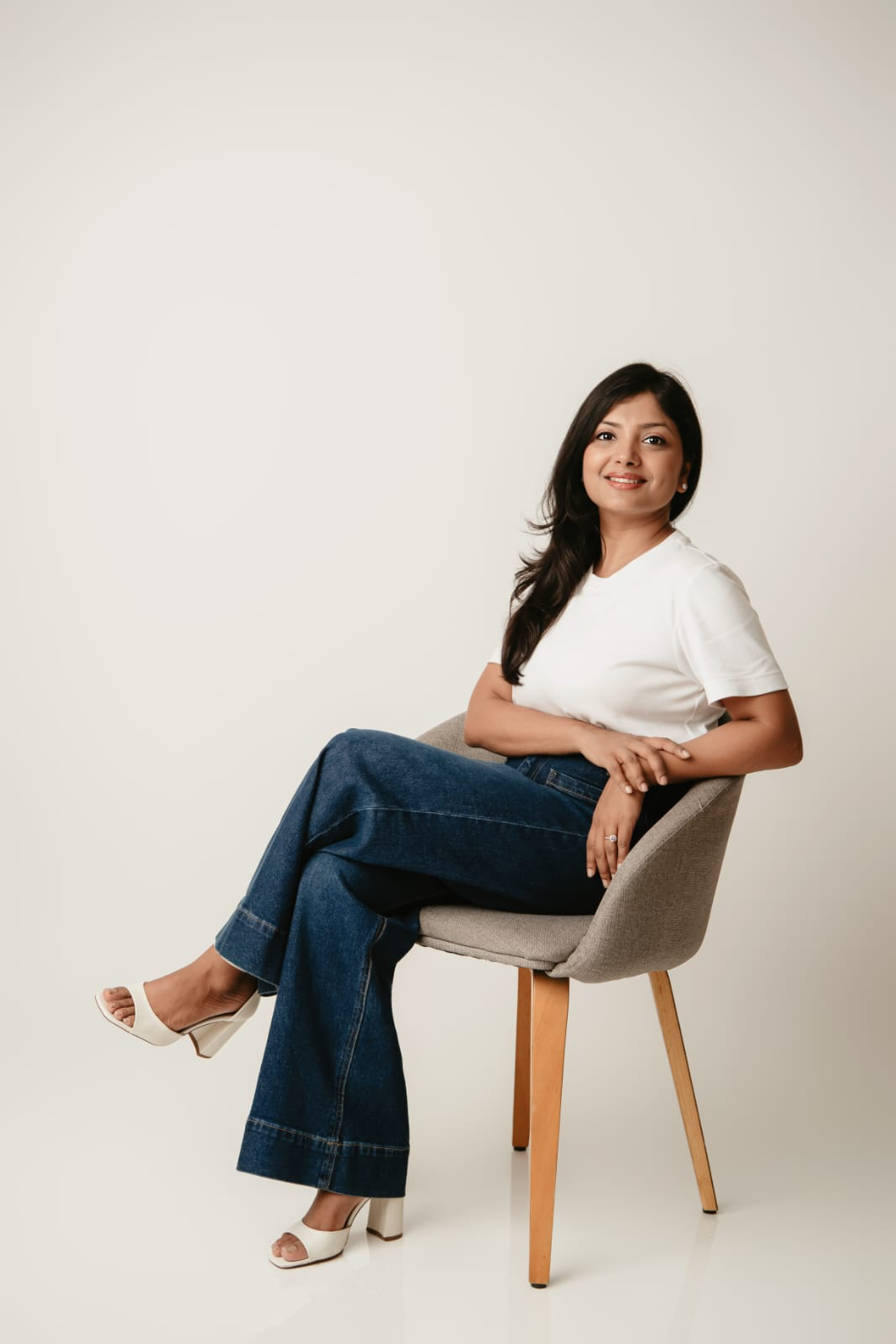
For the inaugural issue of The Business and Economic Review, themed "Women Redefining Business," I sat down with Anisha Saraf, co-founder of Dot & Key. I'd expected to talk skincare. What I got was a masterclass in how to build something that actually lasts.
The throughline of our entire conversation was deceptively simple: the best businesses don't chase trends. They solve problems that everyone else has been too busy or too unimaginative to notice.
Today, Dot & Key is a name most Indian skincare consumers know well. The packaging is hard to miss, the formulations are science-backed, and the Nykaa partnership has put it firmly in the front row of the country's booming beauty industry. But the brand didn't start with anyone's ambition to build the next unicorn. It started with Anisha paying attention.
After her post-graduation, she joined her father's beauty and skincare business — and found herself genuinely absorbed by it. Her background in chemistry and food technology meant she was drawn to the science of it all: what went into a formula, how a product felt on skin, why some brands stayed with you and others didn't. And the more she looked, the more she noticed something was missing from the Indian market.
"There was really no newness in the product format, in the texture, in the real packaging," she told me. Global beauty was experimenting wildly, new textures, new categories, entirely new rituals, while Indian brands were largely repackaging the same ideas in slightly different bottles.
So she and her husband Suyash decided not to launch just another skincare label. They wanted to fill in what was missing. Products for swimmers dealing with chlorine damage. Hand creams that moisturised and sanitised at once. Everyday problems that people had simply learned to live with because no one had bothered to solve them. The brand name itself came from this instinct: find the missing dots in someone's skincare routine, and give them the key to fixing it.
Of course, a good idea is just the start. One of the hardest early challenges, Anisha said, was figuring out product-market fit. They had dozens of concepts; they couldn't pursue all of them. Deciding what to back and what to let go was one of the most defining parts of building the business. And they were doing it in 2018, when India's D2C landscape was still finding its feet.
"There was no playbook," she recalled. "Everything was very, very new." They had to build their own systems from scratch- for marketing, distribution, customer relationships, while the industry around them was still being invented.
One of the things that struck me most was how she thinks about branding. In a world where most startups try to out-advertise each other into relevance, Anisha sees it differently. If your product is distinctive enough, if the design is thoughtful enough, if it genuinely solves something, people remember it without being constantly reminded. Dot & Key's packaging isn't just a visual choice. It's a strategic one.
The same clear-headedness shapes how she thinks about growth. When Nykaa came into the picture, she was firm about what that relationship meant to her. "I wouldn't call it an acquisition; I would call it a partnership," she said. The right investor, in her view, isn't just someone with deep pockets, it's someone who believes in the founders, understands where they're trying to go, and is in it for the long haul.
That distinction matters more than it might seem. So much of today's startup culture is built around the idea that more money solves more problems. Anisha pushes back on that. "Money is not the answer," she said plainly. "You can't just throw money at every problem and get a solution to it." Before you scale, you have to be sure the product is actually right, that it's solving something real, and doing it better than what already exists.
This isn't abstract philosophy for her. She comes from a traditional business family, where the goal was never to impress investors, it was to build something that would still be standing decades later. That instinct runs through everything Dot & Key does, including its partnership with Nykaa, which she describes as focused on steady, intentional growth rather than chasing metrics that look impressive on paper but hollow out a brand over time.
We also talked about something that's harder to quantify: the relationship between a founder and their brand. Anisha believes that while a founder gives a company its early soul, the real goal is to build something that eventually becomes bigger than any one person. The founder sets the direction; the brand has to learn to run on its own.
And on the question of women redefining business, the theme of this issue, her answer was characteristically direct. She doesn't particularly want to be seen as a "woman founder" first. "It's not about being a woman founder first; it's about building great businesses." And yet she also recognises what's changed: more female founders, more female investors, more visible proof that entrepreneurship isn't a lane that belongs to one kind of person. That visibility matters, even if she wears it lightly.
What stayed with me after our conversation wasn't any single insight. It was the consistency of her thinking- the way every decision, from packaging to partnerships to product selection, came back to the same question: is this built to last?
Dot & Key wasn't built by outspending anyone or outshouting anyone. It was built by looking carefully at what was missing, and then doing the work to fill that gap. For anyone trying to figure out what modern entrepreneurship actually looks like, that might be the clearest answer there is.
— End of preview
Back to Issue →More from this Issue
Continue Reading
Business Feature
The Bumble Effect: How Whitney Wolfe Herd Turned a Women-First Vision into a Billion-Dollar Business
Leticia Sathler Kelen · 14 min read
Opinion & Editorial
Labour of Liberation: The Political Economy of Girlboss Feminism
Yani Tyagi · 15 min read
Feature Analysis
The Billion-Dollar Cost of Ignoring Women: Why the most expensive mistake in business history keeps happening — and who is finally fixing it.
Kushal Nahata · 12 min read